After an eight-year journey, the BepiColombo probe is in orbit around Mercury
The European Space Agency confirmed on Sunday, 22 November, that the European-Japanese BepiColombo mission had achieved orbital capture around Mercury, at the end of a journey of more than 10 billion kilometres that began in October 2018.
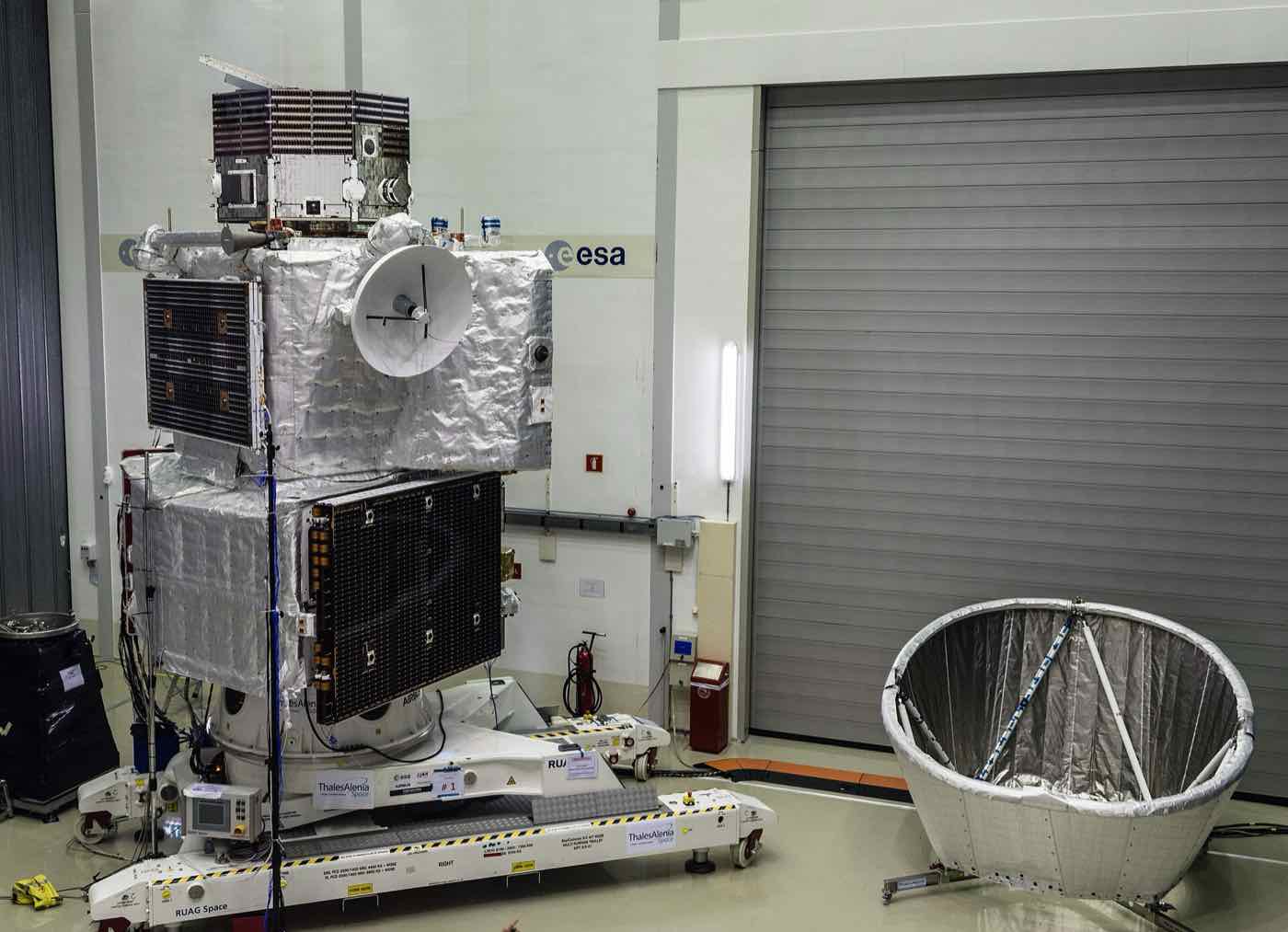
Mission accomplished, or nearly. BepiColombo is now circling Mercury. The European Space Agency (ESA) announced it on X on Sunday, 22 November: its flight dynamics team confirmed that the spacecraft had achieved orbital capture around Mercury. Engineers were still analysing the data sent back by the probe, AFP reported via franceinfo.
The decisive moment came on Saturday evening. ESA said then that the spacecraft had turned as planned, ahead of a 37-minute thruster burn. The goal: slow down enough to be captured by the gravity of the smallest planet in the Solar System.
An eight-year journey
It was a long road. Launched in October 2018, the four-tonne twin probe travelled more than 10 billion kilometres. It made nine planetary flybys to adjust its speed and trajectory, franceinfo and RTBF reported.
The final weeks were busy. On 3 September, the transfer module that had carried the stack this far separated, according to ESA's mission log. On 15 September, all the European orbiter's instruments were switched on together for the first time since that separation. A first trajectory correction followed on 24 September.
Two probes, two missions
BepiColombo is a pairing of two spacecraft, each run by one agency:
- ESA's Mercury Planet Orbiter (MPO) will study Mercury with unmatched precision, passing as close as 480 km from its surface;
- the Mercury Magnetospheric Orbiter, known as Mio, built by Japan's space agency JAXA, will observe the planet's space environment, including its magnetic field, from an elliptical orbit reaching out to 11,000 km.
According to ESA mission manager Santa Martinez, the mission should open a new chapter in our understanding of the Solar System.
An extreme planet
Mercury remains poorly understood. Blasted by solar radiation, it sees temperatures swing from about -180°C to 450°C, RTBF noted. The first probe to visit it, NASA's Mariner 10, flew past in 1974.
What next?
The work is only beginning. Under the flight plan, the two orbiters are due to separate on 9 and 10 December to reach their own orbits. ESA then plans to release the shield that protected Mio during the journey on 16 December. The science phase is due to begin in April 2027.