Sixth day of cost-of-living protests: 82,500 marchers says the Interior Ministry, turnout falls again
For the sixth Saturday in a row, unions, young people and Yellow Vests marched against the rising cost of living on 21 November. The Interior Ministry counted 82,500 protesters across France, including 21,500 in Paris, down from 106,000 a week earlier. The CGT union claims 150,000.
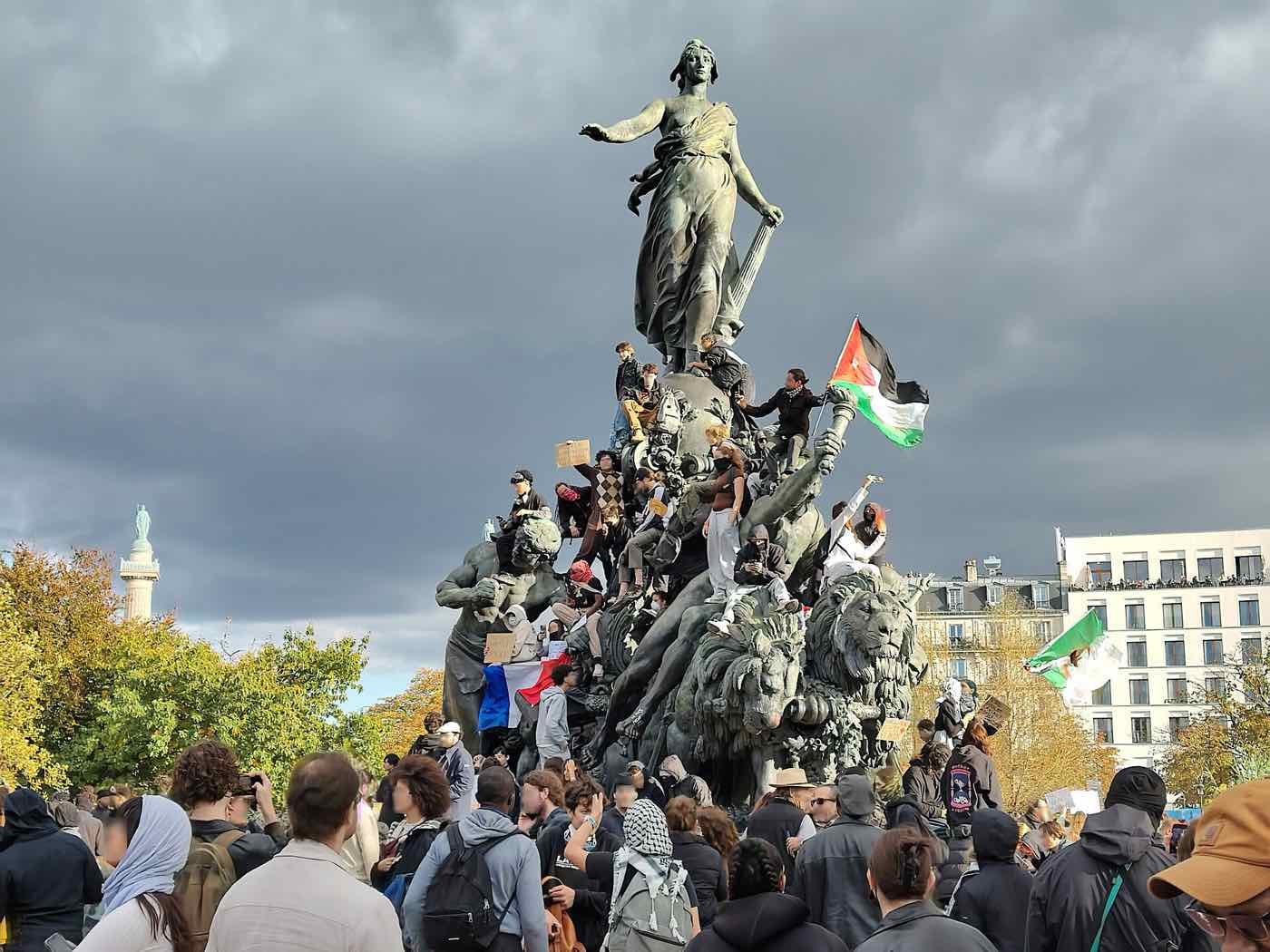
The movement is holding, but fraying. For Act VI of the protests against the cost of living on Saturday, 21 November, the Interior Ministry recorded 82,500 protesters across France, including 21,500 in Paris, according to figures reported by France 24 in the late afternoon. The CGT union put forward numbers almost twice as high: 150,000 nationwide, including 45,000 in the capital.
Both sides point the same way. A week earlier, the ministry counted 106,000 protesters, including 24,000 in Paris, while organisers claimed 200,000.
A steady decline since 17 October
The contrast with the start of the movement is stark. Authorities counted 565,000 people on the streets on 17 October, then 410,000 on 24 October, 320,000 on 31 October and 146,000 on 7 November, Sud Radio recalled. Outside the capital, the slowdown was visible by midday: at 2 p.m., the ministry counted only 2,200 participants outside Paris, across 44 events, compared with 9,800 across 78 events at the same time the previous Saturday, according to Entrevue.
In Paris, the march of the union alliance (CGT, CFDT, FO, FSU, Solidaires), joined by youth organisations and the housing rights group Droit au logement, set off at around 2 p.m. from Place de la République. It reached Place de la Nation via Boulevard Voltaire, the only route authorised by the police prefecture. The march arrived at Nation without trouble, France 24 reported. Some placards targeted the law on the presumption of lawful use of weapons, passed on Friday.
Sixteen metro and RER stations were closed and sections of lines 6 and 11 were suspended, according to Sud Radio.
Yellow Vests mark eight years
The day coincided with the eighth anniversary of the Yellow Vests. Their coordination had filed a route from Bastille to Concorde, which the prefecture rejected, as it did a route towards the Champs-Élysées. They eventually joined the union march. The coordination announced about 150 actions in France and 539 initiatives in seven European countries. At the Beynost toll station on the A42 motorway in the Ain department, around thirty Yellow Vests tried to open the barriers for free before gendarmes moved them on, without clashes.
Tension in Lyon, split in Marseille
Elsewhere, the day was rougher. In Lyon, where protests were banned across a wide area, unauthorised marches were dispersed with tear gas, according to France 24. In Marseille, the prefecture counted 4,600 protesters; the march split and part of it turned into an unauthorised demonstration. In Lille, some 5,000 people marched, accompanied by a band.
The Interior Ministry, which had deployed around 70,000 police officers and gendarmes, described the situation in the early afternoon as broadly calm with no notable incidents, with seven arrests.
Reactions and next steps
On the left, La France insoumise is calling for the movement to continue. MEP Manon Aubry accused the government on BFMTV of trying to let the protests rot, France 24 reported, and called for political and social answers.
The next dates are already set, on a different front: marches against violence against women are planned on 25 November in Bordeaux, Marseille and Nantes, then on 28 November in Lille, Lyon and Paris.