Chernobyl arch: Paris donors raise only half of the €500 million needed
Meeting in Paris on Monday at France's initiative, fifteen contributors pledged €278 million to repair the arch over Chernobyl's stricken reactor, pierced by a Russian drone in 2025. At least €500 million is needed. Paris raises its own share to €40 million.
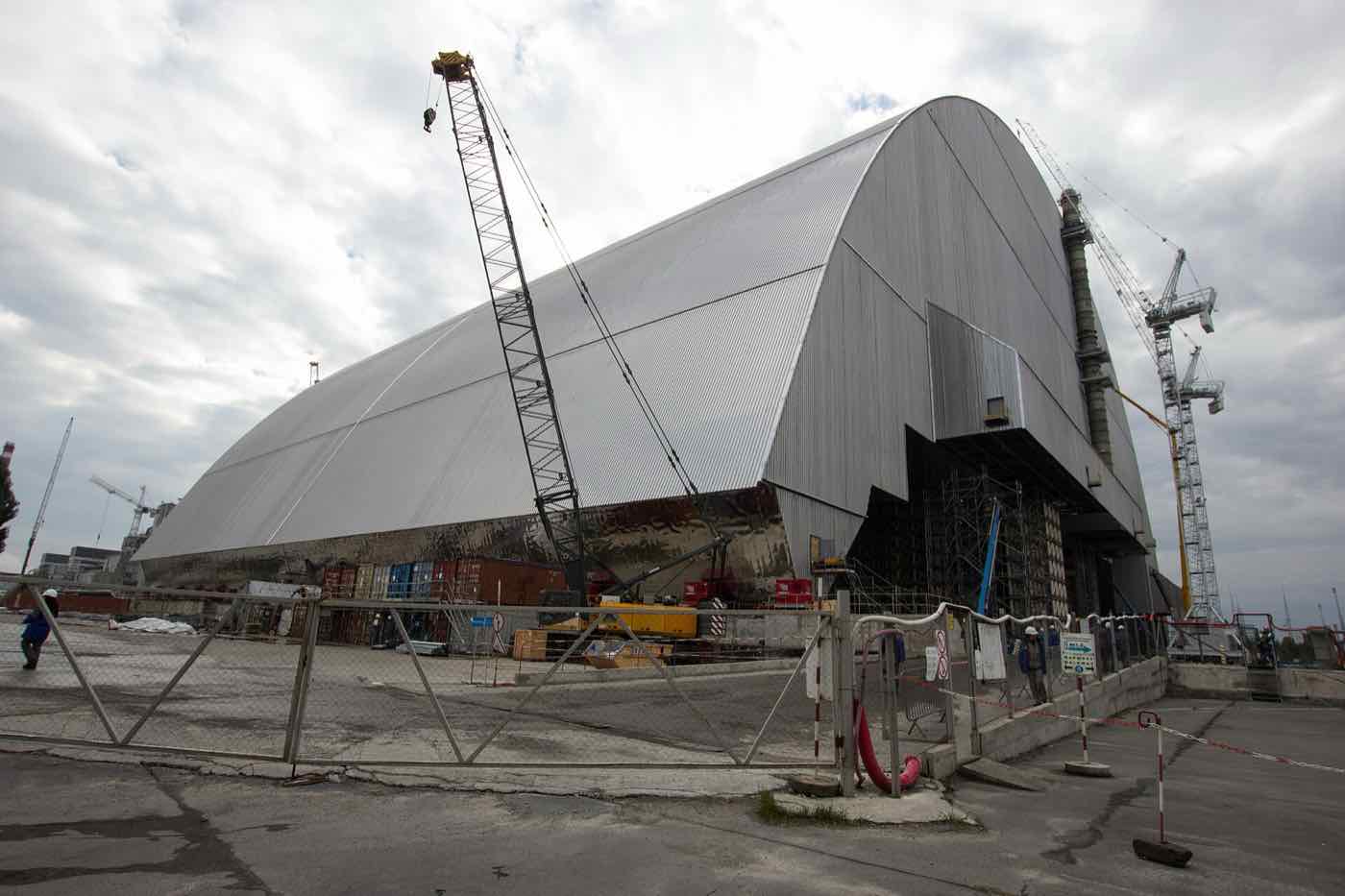
The bill is known; the money is not there yet. At the close of a donors' conference held in Paris on Monday, 9 November, €278 million had been pledged to restore the giant arch that confines reactor No. 4 at Chernobyl, in Ukraine. The European Bank for Reconstruction and Development (EBRD) puts the cost of a full repair at no less than €500 million.
France's minister for Europe, Benjamin Haddad, announced in his closing remarks that confirmed commitments now stood at €278 million from 15 contributors, adding that further pledges could still come in during the day. That leaves a gap of at least €222 million.
France adds €30 million
Before the talks opened, Economy Minister Roland Lescure announced an extra €30 million from France. That brings the French contribution to €40 million, including €10 million already committed to preliminary studies. He also set the deadline, saying the sum had to be raised by next spring.
The conference was co-chaired by France, the Ukrainian government and the EBRD, as part of France's G7 presidency. In October, at a meeting of G7 finance ministers in Bangkok, the major economies had already announced €260 million. In late April, the United States had pledged up to $100 million and urged its partners to follow suit.
A Russian drone through the shell
The arch, a steel structure installed in 2016 over the concrete sarcophagus hastily poured after the April 1986 explosion, was hit by a Russian drone on the night of 13 to 14 February 2025. The strike damaged its outer and inner cladding as well as several safety systems.
The French government stressed the scale and complexity of the damage. In the spring, the US State Department warned that without repairs the structure could no longer provide adequate protection, raising the risk of dangerous radioactive leaks in Europe. According to the EBRD, restoration must be completed by 2030 to limit corrosion of the steel structures.
A very real risk
EBRD president Odile Renaud-Basso, who is French, described the effort as international support for nuclear safety that concerns everyone. She warned that, without repairs, the danger of a very serious accident comparable to 1986 remained entirely real.
In Paris for the meeting, Ukraine's deputy energy minister Anatolii Kutsevol sounded confident, saying he was convinced the €500 million needed would be found. Roland Lescure, for his part, called for the work to continue and for the circle of donors to be widened.
What next
The funding race now runs until spring 2027, the deadline set by Paris. The next steps rest on the technical assessments presented on Monday and the restoration strategy put forward by the EBRD, which manages the funds. Until then, the damaged arch remains the only modern barrier between the destroyed reactor and the outside world, in a country at war.