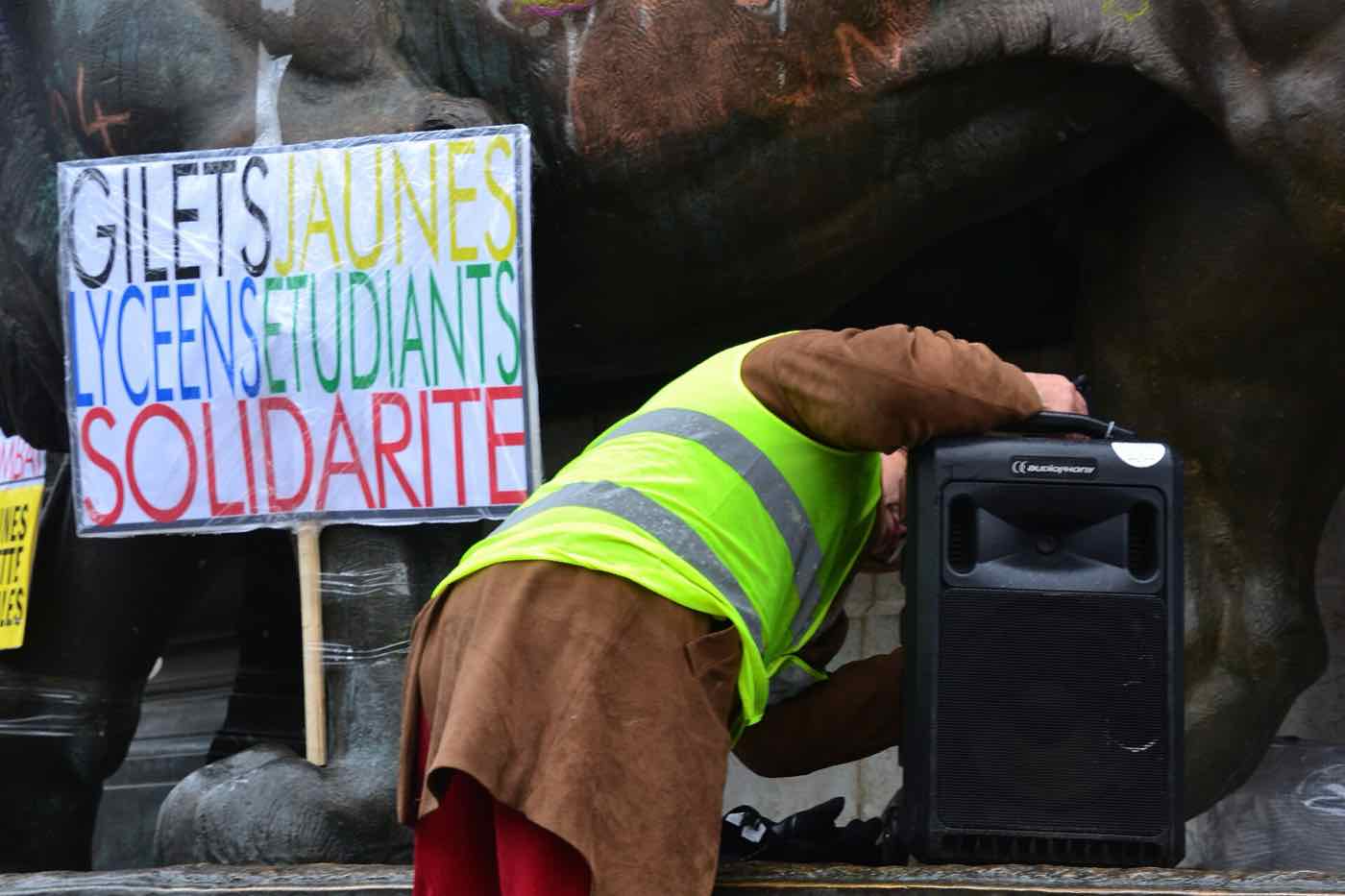
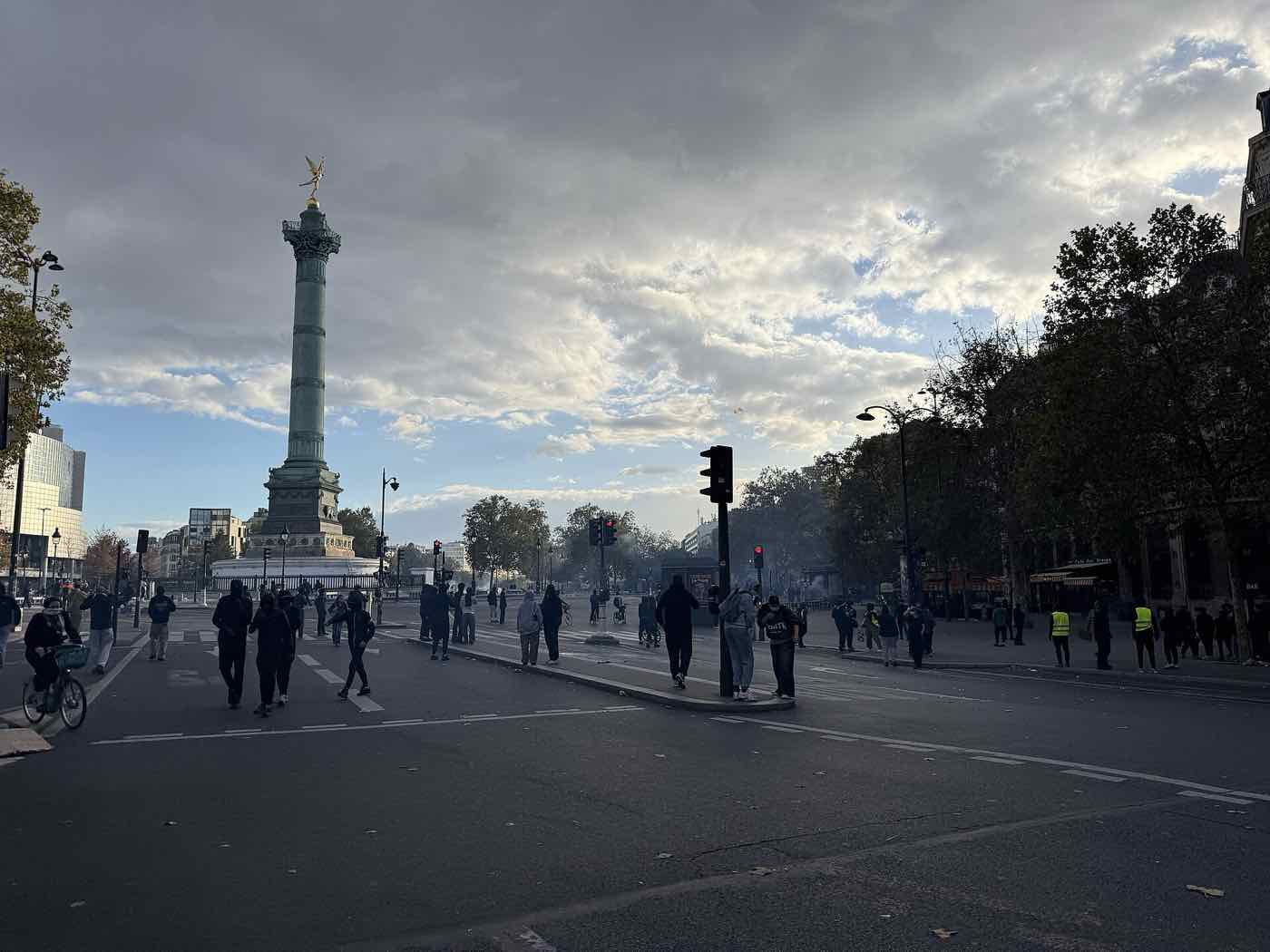
Schools and universities blockaded: battle of numbers over "Black Tuesday" ahead of Thursday's strike
Youth organisations called for fresh mass blockades of secondary schools and universities on Tuesday. The government counts 48 lycées blockaded and 51 higher-education institutions disrupted; school student unions claim ten times as many. The stated aim: to build up to Thursday's cross-sector mobilisation.
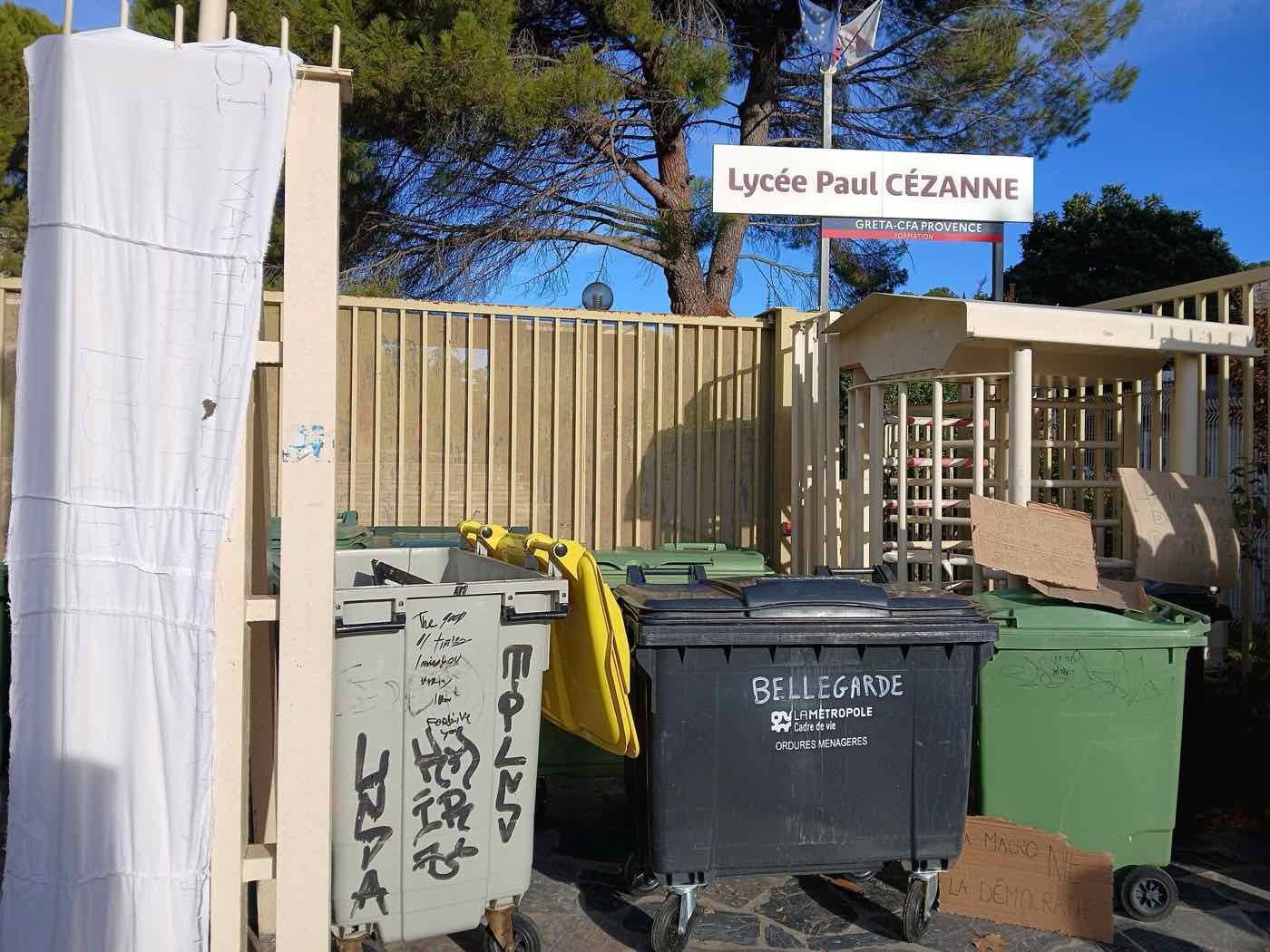
Bins piled up against the gates, marches under heavy surveillance: young people mobilised against the rising cost of living held their "Black Tuesday" on 3 November. The day after returning from the All Saints' holidays, school and university student organisations, which consider the government's announcements insufficient, called for mass blockades of lycées (secondary schools) and universities.
48 lycées according to the ministry, more than 500 according to the USL
As on every day of action, the figures diverge sharply. The Education Ministry counted 48 lycées blockaded at 9.30am, up from 41 the day before, barely more than 1% of the country's roughly 3,700 lycées. The Union syndicale lycéenne (USL), a school students' union, called the figure absurd and said more than 500 schools were affected by a full or filtering blockade.
In higher education, the ministry counted 51 of 184 institutions disrupted, less than a third. The Union étudiante, a student union, said one university in two was disrupted.
On the ground, the mobilisation took various forms. In Rennes, police dispersed more than a hundred school students to clear a blockaded school, according to BFMTV. In Marseille, students switched to a filtering blockade to avoid police intervention. In Paris, the Assas university site and the Lycée Louis-le-Grand were affected in the morning; in Toulouse, a lycée was blocked by barricades, and in Lille, the Pont-de-Bois campus was blockaded according to La Voix du Nord. In Lyon, a student march authorised by the prefecture was due to set off at 10am from Place Jean-Jaurès.
In Paris, the route to the Medef banned
In the capital, the police prefecture banned the route planned by Interfac Île-de-France, from the Panthéon to the headquarters of the Medef employers' federation, deeming it incompatible with current security constraints. The administrative court rejected the collective's appeal on Tuesday. The imposed route runs from Porte de Charenton to Porte de Montreuil. The prefecture expected between 15,000 and 30,000 demonstrators.
Arrests and investigations
The movement continues to be marred by incidents. In Nantes, three people, school students according to BFM as cited by 20 Minutes, were arrested on Tuesday morning in the investigation into the fire that ravaged the entrance hall of the Lycée Nelson-Mandela on 1 October; the school has been closed since. The region puts the cost of repairs at nearly €4 million; a partial resumption of classes is planned for 16 November.
In Montpellier, a school nurse who was violently arrested outside a blockaded lycée was briefly held in police custody for insulting an officer, then released without charge. In Marseille, the IGPN, the police watchdog, was called in after a complaint from a 39-year-old man who says he lost seven teeth and broke his nose on the sidelines of a demonstration.
Justice Minister Gérald Darmanin told BFMTV-RMC there had been 4,914 people taken into police custody and 329 jailed since the protests began on 17 October.
Eyes on Thursday
For the student organisations, the day was just a good warm-up. School and university students intend to join Thursday's cross-sector day of strikes and demonstrations over purchasing power, which is set to bring together private-sector workers, civil servants and pensioners. Prime Minister Sébastien Lecornu said he was ready to meet school students again next week.
More in Society